
EZRaider Range: How Far Can You Travel on a Single Charge?
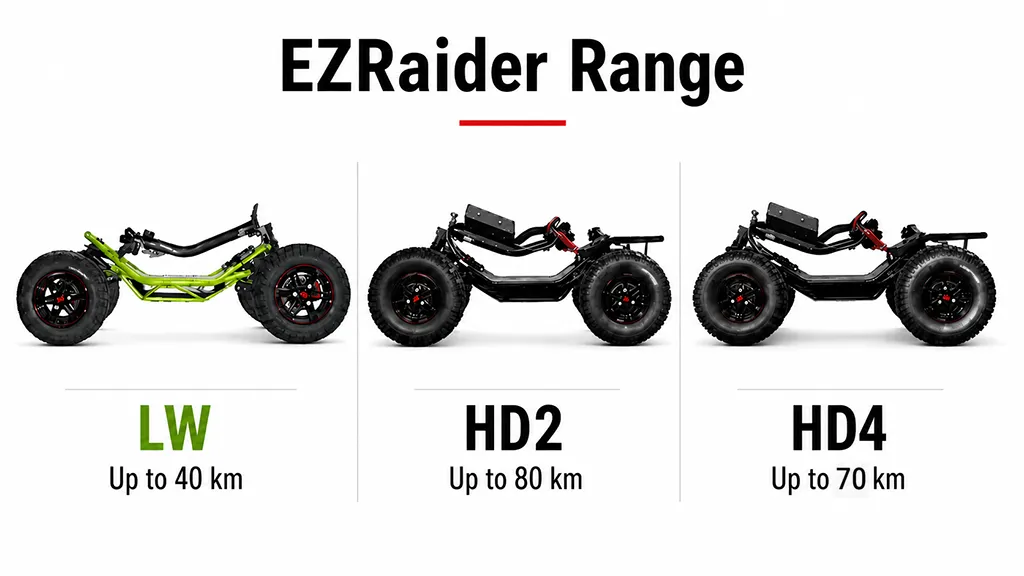
When choosing an electric off road mobility solution, it is easy to be impressed by the motors, suspension and design, but after the initial excitement comes a much more practical question, how far can you actually travel? In the case of EZRaider, this is one of the most interesting aspects, with the HD2 offering a maximum range of up to 80 km on a single charge, while the HD4 offers a maximum range of up to 70 km.
This kind of range makes it possible to think of EZRaider not only as a solution for short trips, but as a tool that can accompany the rider for hours of errands, touring, work, patrols or activity in the field, at the same time, as with any electric mobility solution, the actual range is not a fixed number, it varies according to riding style, terrain, rider and equipment weight, battery condition and the amount of load placed on the motors.
Up to 80 km with the HD2 and up to 70 km with the HD4
The EZRaider HD2 and HD4 models are equipped with a 3000Wh lithium ion battery, but their maximum ranges are different, the HD2 offers up to 80 km on a single charge, while the HD4 offers up to 70 km. These are significant figures, especially because EZRaider is not designed only for asphalt and short journeys, it is built to handle trails, dirt roads, agricultural areas and changing terrain conditions, so the combination of a large battery, four wheels and a unique suspension system allows riders to spend more time moving and less time near the charger.
It is still important to understand the meaning of the word “up to”, maximum range is measured under certain conditions and every ride is different, a flat and relatively firm route is not the same as a mountainous trail or soft terrain, and smooth riding at a steady pace does not consume the same amount of energy as strong acceleration, long climbs or carrying a heavier load.
Terrain Has a Direct Effect on Range
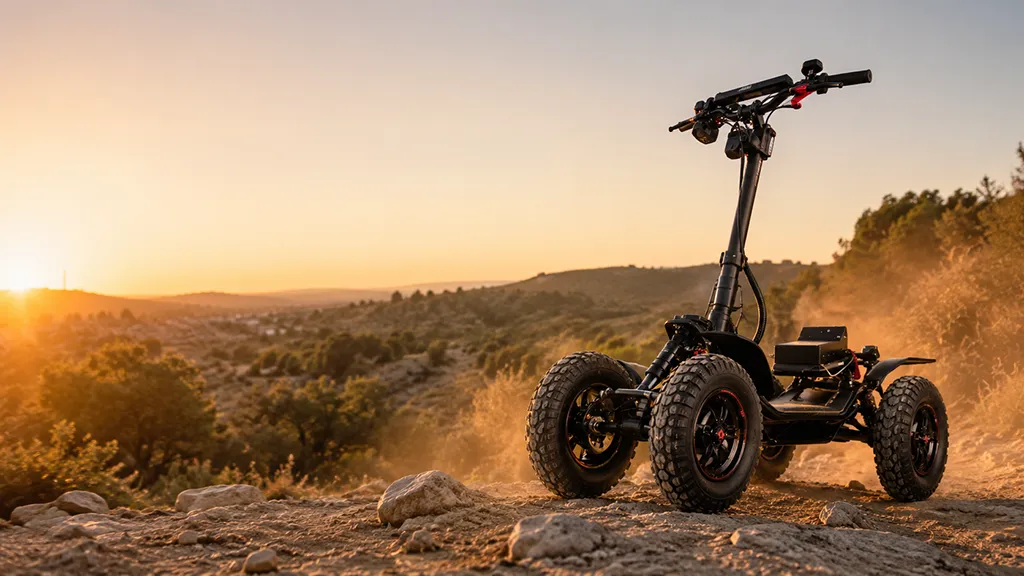
One of the things that makes EZRaider so interesting is its ability to reach places where other mobility solutions may begin to struggle or get stuck, but demanding terrain also comes with a higher energy cost, when the wheels are dealing with sand, mud, rocks, inclines or soft ground, the motors need to work harder in order to maintain movement.
For that reason, 30 km on a firm trail is not necessarily equivalent to 30 km on a challenging mountainous route, the more power the terrain requires, the higher the electricity consumption becomes, which is why it is useful to plan a route not only according to the total distance, but also according to the type of terrain waiting along the way.
Weight Also Plays a Role
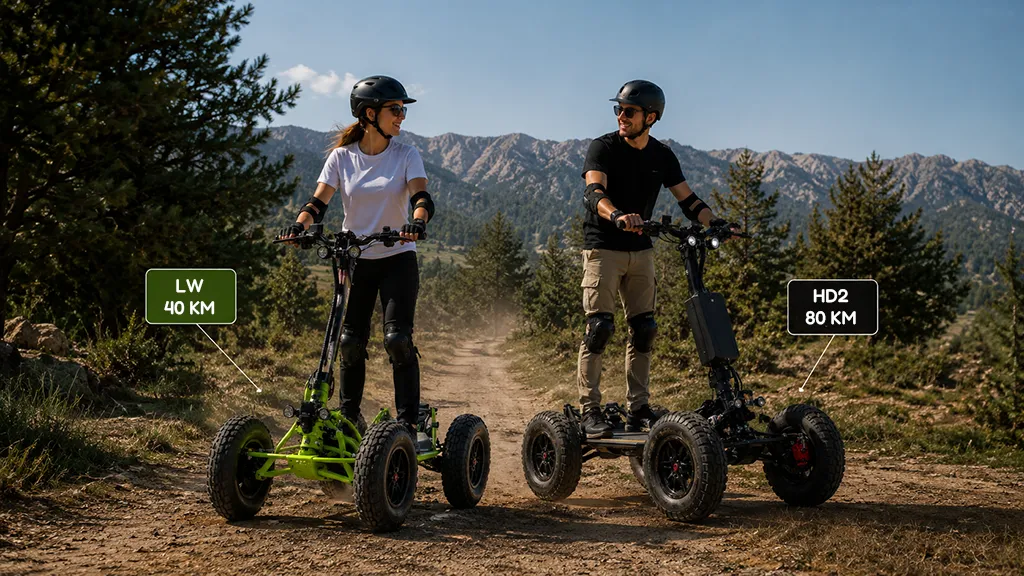
As with any electric mobility solution, the total weight carried by the EZRaider affects energy consumption, the weight of the rider, equipment carried on the vehicle and additional accessories all create extra load on the motors, particularly during acceleration, uphill riding and movement over soft terrain.
This becomes even more important in professional use, a farmer moving between fields with equipment, a security professional carrying out patrols for several hours or a user working with the E CART will generally consume more energy than a rider going on a relaxed trip with minimal equipment, so when planning a long day of use it makes sense to consider not only the number of kilometres, but also the total weight the vehicle will carry along the way.
Riding Style Can Make a Big Difference
The way you ride also has a direct influence on range, strong acceleration, frequent changes in speed and fast riding over long periods require more energy from the motors, while smoother riding, gradual acceleration and maintaining a consistent pace can help manage the battery more efficiently.
In practice, extending the range is not always about having a larger battery, sometimes it simply comes down to riding more efficiently, riders who know how to read the terrain, maintain a steady pace and avoid unnecessary power demands can make better use of every charge.
The Braking System Also Helps Manage Energy
All EZRaider models are equipped with a regenerative braking system, which allows some of the energy produced during deceleration to be returned to the battery, of course, this does not mean the battery recharges itself during the ride in a way that replaces normal charging, but it does help the system use available energy more efficiently.
When looking at EZRaider as a complete system, range is not determined by battery size alone, it is also influenced by the motors, the way energy is managed and the way the rider and the vehicle work together throughout the route.
HD2 or HD4: Similar Range, Different Character
It is interesting to see that both the HD2 and HD4 use a 3000Wh battery, but they offer different maximum ranges and are designed for different types of use, the EZRaider HD2 offers a maximum range of up to 80 km and is equipped with two 1200W motors, while the HD4 offers a maximum range of up to 70 km and is equipped with four 1200W motors, one motor for each wheel.
This difference becomes particularly important when moving into more challenging terrain, the HD4 is designed to provide more traction, power and mobility, especially when dealing with soft ground, inclines or heavier loads, while the HD2 offers a balance between power, range and lower overall weight, which means the decision between the two should be based not only on the number of kilometres, but also on the type of terrain and the intended use.
What About the EZRaider LW?
The LW model is designed for users looking for a lighter and more compact option, it is equipped with a 1740Wh battery and two 1200W motors, so its overall balance is different from that of the HD models.
While the HD2 and HD4 are intended for users who need greater range and longer periods of operation, the LW places greater emphasis on lower weight, compact dimensions and easier transportation, for someone who does not require a full day in the field or intensive professional use, these characteristics can be a significant advantage.
How Long Does Charging Take?
Charging generally takes between 3 and 5 hours, depending on the model, the battery is charged directly through the vehicle’s charging port, so there is no need to remove it every time.
For private users, this means finishing a day of riding, connecting the EZRaider to the charger and preparing it for the next trip, while in professional use, charging periods become part of the daily routine, so it is worth planning them in advance according to the number of hours the vehicle is expected to operate.
How Can You Get More From Every Charge?
There is no single trick that doubles the range, but several habits can help, smooth and moderate riding, gradual acceleration, proper route planning and taking the carried weight into account can all help reduce unnecessary energy consumption, proper tyre maintenance and maintaining the correct tyre pressure according to the manufacturer’s instructions can also contribute to more efficient operation.
These factors may seem relatively small on their own, but over the course of a full day they can make a noticeable difference to the distance you can travel before needing to recharge.
Range Is More Than Just a Number
The real advantage of EZRaider range is not simply the number shown in the specifications, the more important question is what you can actually do within that range, you can move between trails, patrol large areas, travel between agricultural plots or enjoy longer outdoor routes without constantly thinking about the remaining battery level.
In other words, a range of up to 70 to 80 km across the HD models gives users greater freedom to plan the day around the mission or the route rather than around the nearest charging point, and this is where a technical specification becomes a real practical advantage.
How Much Range Do You Really Need?
Before choosing an EZRaider, it is useful to start with the way you expect to use it on a daily basis, if most of your journeys are relatively short, if easy transportation is important and if you are not planning to spend long hours in the field, the LW may provide exactly the balance you need.
If you are looking for a vehicle that can support longer working days, extended routes or professional use, the HD2 with its 3000Wh battery and maximum range of up to 80 km may be the better fit, while those who also need four motors, greater load capacity and stronger mobility in difficult terrain should consider the HD4, which offers a maximum range of up to 70 km.
Ultimately, there is no single range that suits everyone, the right choice depends on the route, the load and the way you intend to use the vehicle.
The Bottom Line
The range of EZRaider on a single charge is certainly impressive, but the real story goes beyond the number in the specifications, terrain, riding style, rider and equipment weight, inclines and overall usage all influence how far the vehicle can travel in real conditions.
That is why, when choosing an EZRaider, it is worth asking not only how far it can go, but also where you want to ride, how much time you expect to spend in the field and what you need the vehicle to do throughout the day.
Want to find out which EZRaider is right for your range and usage needs? Contact us and come experience it with a test ride.
